

Why Social Dancing Feels Different from Ordinary Social Life

Dance Creates a Different Kind of Social Space
Outside dance, many forms of touch, prolonged eye contact, physical proximity, sensual movement, and bodily interaction would often feel inappropriate, invasive, or heavily charged.
Inside dance, however, they become socially possible.
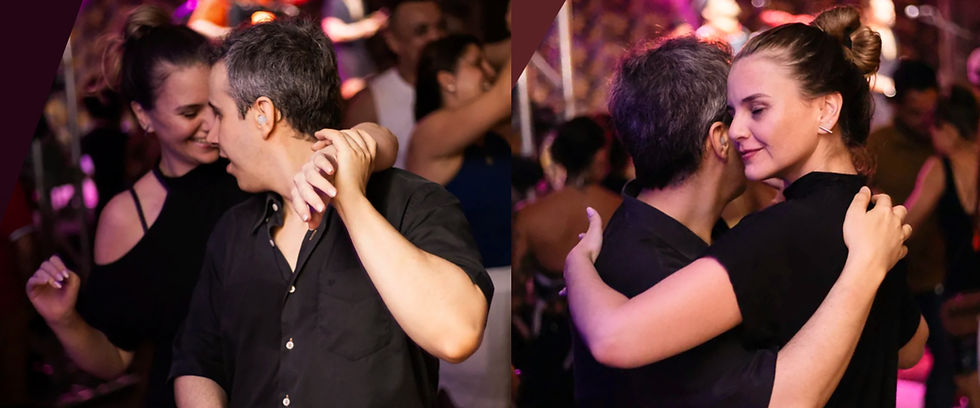
Two strangers may spend several minutes embracing each other, moving together, synchronizing rhythm, energy, breathing, intention, and emotional presence through music. Outside the dance floor, this kind of interaction would carry completely different meanings in most social contexts.
And maybe this is one of the reasons social dancing feels so unique.
Dance creates a temporary space where human beings are allowed to explore parts of themselves that are often restrained, hidden, or socially controlled in everyday life. Through music and movement, people can experience forms of playfulness, sensuality, emotional openness, flirtation, vulnerability, physical expression, and human connection that would often feel out of place in ordinary social interaction.
Not necessarily as explicit sexuality, but as energy, tension, chemistry, movement, and embodied interaction between two people.
Dance creates a different social environment where these forms of expression become partially ritualized, aestheticized, and socially accepted.
Why This Dimension of Dance Matters
And I think something important is lost when we try to completely sterilize this dimension of dance.
The existence of sensuality, attraction, emotional tension, or physical presence inside social dancing is not necessarily a problem. In many ways, these elements are part of what make dance feel alive, human, exciting, and emotionally meaningful.
The real question is not how to eliminate these dynamics.
The question is how to navigate them with sensitivity, reciprocity, awareness, and respect.
Because dance also creates a permissive environment. And permissive environments always require responsibility.
That is why I believe social dancing works best when people learn to perceive not only their own desires and forms of expression, but also the responses, comfort, boundaries, and openness of the other person.
The beauty of social dancing is not that “anything goes.”
The beauty is that dance creates a rare space where human beings can safely explore connection, expression, sensuality, intimacy, creativity, and presence together in ways that ordinary social life often does not allow.
Many of these ideas also connect to broader reflections about intimacy, attraction, reciprocity, and social interaction inside partner dancing:
ABOUT THE AUTHOR
Rafael Piccolotto de Lima is the Founder and Educational Director of Forró New York, as well as a Latin Grammy-nominated composer, arranger, and music director.



Comments