

What Is Forró? Understanding the Dance, Music, and Culture

Forró is a Brazilian musical genre, a partner dance, and a broader cultural practice that integrates music, movement, and social interaction.
If you are asking what is forró, the most direct way to understand it is as a cultural expression originating in the Northeast of Brazil that combines music, partner dancing, and community life.
Rather than a single definition, forró is best understood as an evolving cultural practice shaped by music, dance, and the communities that sustain it.
Forró, as we understand it today, did not emerge as a fully defined genre from the beginning. Its roots can be traced back to popular dances and community gatherings in the Northeast of Brazil in the late 19th century, often referred to as forrobodó - informal events centered around music, social dancing, and everyday life in rural and small-town contexts.
It was only in the mid-20th century, particularly between the 1940s and 1950s, that forró began to take shape as a more recognizable musical and cultural form. Through the work of Luiz Gonzaga and other artists, the music of the Northeast reached a national audience, establishing the instrumental foundation and repertoire that would come to define forró more broadly.
Over time, it also became strongly associated with seasonal celebrations such as the Festas Juninas, where forró music remains a central element. These festivities are not its origin, but one of the main environments where the tradition became widely expressed and sustained.
Musically, forró is known for a very distinctive instrumentation.
The accordion carries harmony and melody, while the rhythmic foundation is built by the triangle and the zabumba. The triangle articulates the subdivisions continuously, and the zabumba combines low pulses with syncopated accents.
Together, they create a rhythmic feel that is both grounded and fluid, and immediately recognizable.
Where Does Forró Come From? Origins of Forró in Brazil
Like many Brazilian musical traditions, forró emerges from the encounter between different cultural influences, but it organizes these elements into a very specific musical language of its own.
European elements, such as harmonic language and instruments like the accordion, meet rhythmic structures deeply connected to African traditions, characterized by syncopation and layered timing.
This broader pattern can also be seen across many musical traditions throughout the Americas, such as samba, jazz, and many Caribbean and Latin American genres. What distinguishes forró is not the existence of these influences, but how they are organized into a specific musical language.
In its early forms, forró was associated with rural communities and everyday life across the Northeast of Brazil, particularly in states such as Pernambuco, Paraíba, and Ceará.
The songs often reflected lived experiences - migration, drought, work in the fields, and the search for better conditions in urban centers. These themes are especially present in the repertoire popularized by Luiz Gonzaga, a central figure in bringing forró to a national audience in Brazil during the mid-20th century.

Through radio and recordings, he helped transform a regional tradition into a widely recognized musical genre.
Over time, both the music and its themes evolved.
New movements, new audiences, and new contexts reshaped the sound and the cultural meaning of forró, particularly from the 1990s onward with the emergence of what became known as forró universitário, which introduced new aesthetics, audiences, and influences.

What Does Forró Look Like? Understanding the Dance
For someone encountering forró for the first time, it can be difficult to form a clear visual reference.


A simple way to approach it is through analogy.
When people ask me what forró looks like, I sometimes say: imagine tango and salsa met, and the result grew up in Brazil.
This comparison is only meant as an entry point for visualization, not as a historical or structural definition of the dance. It is simply a way to create a mental image using references that are more widely known, especially outside of Brazil.
From tango, people might recognize the idea of walking together, a dance centered on the embrace, and a strong sense of connection. From salsa, they might relate to turns, ornaments, and moments in open position.
But the similarities stop there.
The way connection happens in forró as a dance is different. The way turns are organized is different. The use of space, timing, and body structure follows its own logic.
Some dancers also associate forró with blues, especially because of its grounded quality, the softness in movement, and the sense of continuous connection throughout the body.
In the end, the analogy is not about origin or influence.
It is simply a way to point toward something that is, in practice, quite unique.
And perhaps the most important part of that image is this: whatever it may resemble at first glance, forró carries a character of its own, often described as warm, relaxed, and deeply connected.
If you’d like to go deeper into how forró works in practice as a dance - including its rhythmic structure, connection, and movement logic - I’ve written a separate article focused specifically on that dimension:
To give you an initial point of reference, I suggest watching the video included below - not as a single way of understanding forró, but as one of its many possibilities.
Below is an informal video recorded with a visiting dance instructor, Alice Rodrigues, who joined us in New York for a series of educational forró activities.
We recorded this video as a way to demonstrate to students some of the movements we explored during her time here.
This dance reflects many of the elements described above - a sense of warmth, relaxation, strong partner connection, and musicality in movement.
From Community Practice to Evolving Dance Forms in Forró
The dance associated with forró has changed significantly over time.
In its earlier forms, it was simple, direct, and closely tied to social gatherings. People danced in close proximity, stepping to the rhythm without a structured vocabulary of movements.
Over the decades, the dance expanded.
New influences, new teaching methods, and new contexts - including what I have observed in teaching environments and international communities - led to the development of a wide range of styles, approaches, and technical elements.
This evolution is still ongoing.
At different moments, new tendencies emerge. Some emphasize simplicity and connection. Others explore more complex structures or draw from other dance traditions.
An interesting reflection of this transformation appears in audience reactions.
With the growth of online content, it is not uncommon to see contrasting perspectives. Videos of contemporary forró often receive comments from people who experienced earlier forms of the dance, sometimes questioning whether what they see still corresponds to what they recognize as forró.
These reactions are not contradictions.
They are evidence of a living tradition.
Different generations, regions, and communities relate to forró in different ways, and the dance continues to evolve accordingly.

In recent decades, this has also included the emergence of approaches such as forró roots, which began to take shape in earlier decades but became more clearly defined and widespread in the 2010s and 2020s, offering yet another interpretation of how the dance can be structured and experienced.
Beyond these developments, it is also important to recognize that forró did not evolve in a single direction.
While movements such as forró universitário and approaches often referred to as pé-de-serra or roots represent certain continuities and reinterpretations of earlier forms, other branches moved in very different directions.
Styles such as forró eletrônico, brega, and piseiro emerged with distinct musical characteristics, incorporating new instruments, production aesthetics, and thematic approaches.
Along with these musical changes, the dance associated with them also developed in its own way, often diverging significantly from the structures and movement principles found in other forms of forró.
Rather than a single, unified style, what we call forró today includes a range of practices that reflect different contexts, audiences, and moments in time.
If you’re interested in a deeper reflection on how these transformations unfold - especially in relation to the role of dance schools, teaching structures, and the broader cultural shifts around social dance - I’ve written a more provocative piece exploring these questions in detail:
Forró as a Global Practice Around the World
Today, forró is no longer limited to its region of origin.
It has spread across Brazil and to many parts of the world.
There are active communities not only in Europe and the United States, but also in Canada, Argentina, Uruguay, Chile, Japan, and other countries.
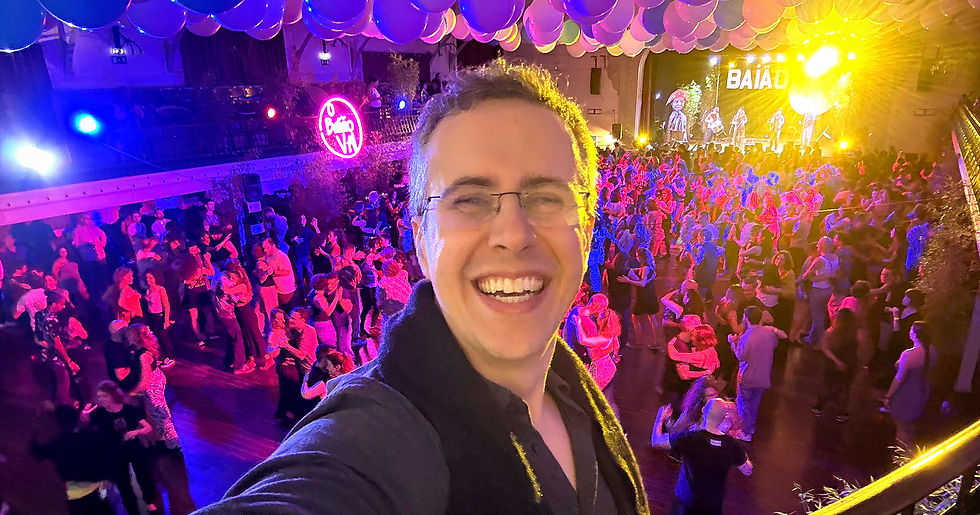
While Europe has played a particularly significant role in the international expansion of forró, the global presence of the dance continues to grow in multiple directions.
In each location, the practice adapts.
Local communities develop their own dynamics, while still maintaining a connection to the music and its origins.
If you are starting to explore forró around the world, understanding the social dimension of the dance is an essential next step.
Forró as a Culture in Transformation
Forró is not a fixed tradition. It keeps changing.
The music has changed over time - in the instruments, in the themes, in the way it’s produced. The dance has changed too, in how people move, in the vocabulary, in the different approaches that have emerged.
The spaces where forró happens have also shifted. What used to be central in the past - whether in clothing, themes, or even context - doesn’t necessarily show up in the same way today.
And at the same time, new things keep appearing.

One example among many of how forró continues to evolve in different contexts is a project I created and direct in New York called Forró Sem Palavras.
It is a project that presents forró in dialogue with jazz and concert music - something that feels especially natural in a city like New York.
The instrumentation and language of forró are reimagined within a hybrid orchestral setting, bringing together a jazz orchestra: a string quartet, a wind section, and a distinctly Brazilian rhythm section.

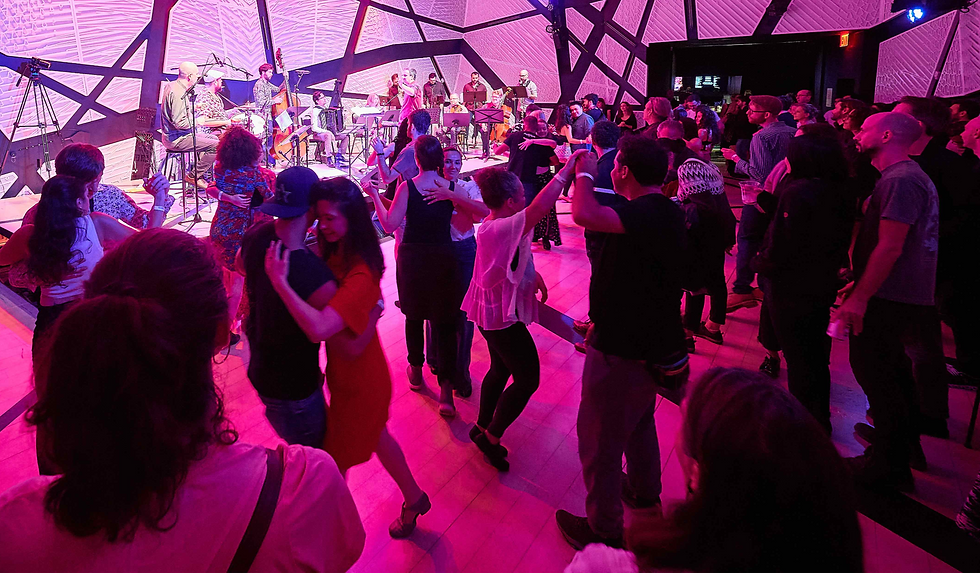
If you would like to learn more about this project, which I have had the joy of leading, I have written a dedicated article exploring it in more detail.
Interested in exploring the different styles, traditions, and musical paths within forró? These articles offer a deeper look:
Rather than a fixed definition, forró is best understood as an evolving cultural practice shaped by music, dance, and social interaction. It involves paying attention to how it changes, and how people keep reshaping it over time - while still keeping key elements of the tradition alive, even as there is space for reinvention and evolution.
If you’re thinking about starting and not sure how difficult forró is to learn, this might help give you a clearer picture:
Frequently Asked Questions (FAQ)
What is forró dance?
Forró is a Brazilian partner dance that developed alongside a musical tradition from the Northeast of Brazil, as part of a broader cultural practice that includes social gatherings and community life.
If you’d like to go deeper into how forró works in practice as a dance, read this blog:
Where does forró come from?
It originated in rural communities in the Northeast of Brazil and later spread nationwide through artists like Luiz Gonzaga.
Is forró similar to salsa or tango?
It shares some visual similarities, but its structure, connection, and movement are distinct.
Forró in New York - history, personal experiences, and local context
This short excerpt from a podcast recorded in New York brings a more personal perspective on forró outside Brazil. In it, I share my own path with the dance, the creation of Forró New York, and some reflections on how the scene has developed in the city - especially as a space for social connection, cultural exchange, and community building.
The video is in Portuguese, with English captions available on YouTube.
ABOUT THE AUTHOR
Rafael Piccolotto de Lima is the Founder and Educational Director of Forró New York, as well as a Latin Grammy-nominated composer, arranger, and music director.



Comments