

Why the Forró Community Feels So Welcoming for Beginners

Updated: May 4
When people consider starting a new dance, the first thoughts usually revolve around steps, coordination, or rhythm.
But another question tends to follow quickly. What will the environment feel like? Will I feel comfortable? Will I be welcomed?
For many, that question shapes the decision as much as the dance itself, and it’s often where the forró community begins to stand out.

Beyond steps: what defines the forró community
Every dance exists not only as movement, but as a social environment. Classes, parties, festivals, and the small interactions in between all shape the experience.
Different scenes evolve around different priorities. Some lean toward performance, others toward structure or tradition. Here, what tends to stand out is a consistent emphasis on connection.
That shows up in the relationship with the music, in the interaction between partners, and in the way people relate beyond the dance floor.
If you want to see how this takes shape in practice, especially in a city like New York, it helps to understand the broader local context.
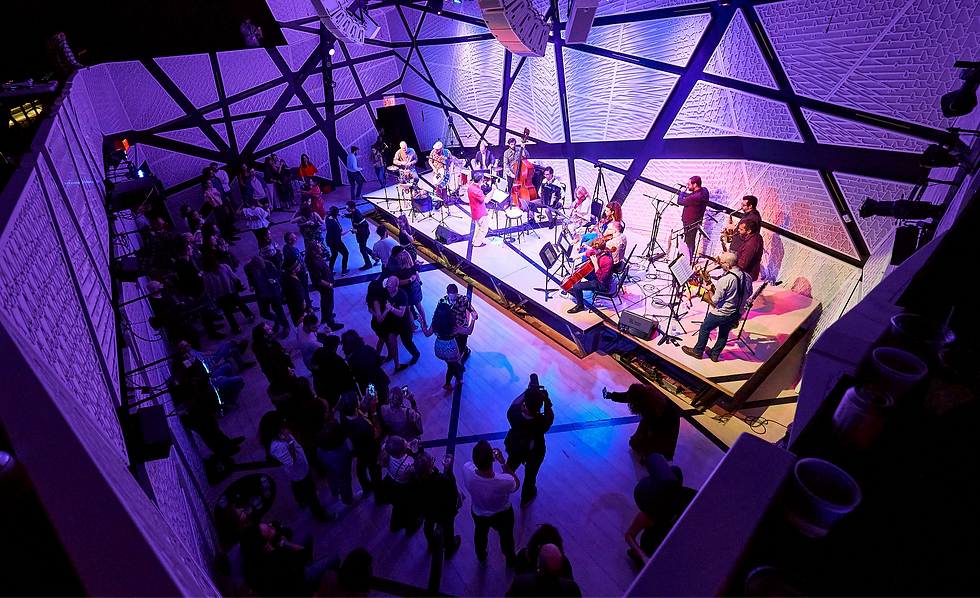
How the forró community supports beginners from the start
One of the most noticeable aspects is how early someone can take part socially. It’s common to attend a first class and feel comfortable enough to stay and dance right after.
Even with very little experience, the environment allows participation. You might dance with other beginners or with someone more experienced who naturally adjusts, often learning something in the middle of the song without even noticing.
Because of that, the gap between learning and participating feels smaller. Instead of waiting until you’re ready, you begin by being part of it.
Some of this becomes clearer when you hear directly from people who experienced it. In the video below, participants from different parts of the world share their impressions after joining the Forró New York Weekend.
If you’re considering starting, having a clear sense of how to enter the scene can make that first step easier.
Connection at the center of the forró community
The quality of the dance is often felt more than displayed. Clarity, comfort, and responsiveness tend to matter more than complexity.
This shifts the focus toward how two people interact. Listening, adapting, and staying present become central.
Over time, that extends beyond the dance itself, shaping how people relate outside of it.

Why the forró community values participation over performance
There is generally less pressure to prove something before joining. Skill develops, but it is not a prerequisite for being included.
For someone arriving for the first time, that creates space to explore without tension. Mistakes are part of the process, not something to avoid.
How the forró community travels across cities
In many dance contexts, people tend to stay within the circle of a specific school or group. With forró, that dynamic often works differently.
It’s very common to arrive at a party or festival in a new city as a complete outsider and, within minutes, start dancing, meeting people, and feeling included. There isn’t the same sense of needing to “belong” to a fixed group in order to participate.
There is also a social culture around forró that encourages interaction. Dancing with new people is not only accepted, but expected. Approaching someone, inviting them to dance, and sharing a few songs together is part of how the community functions.
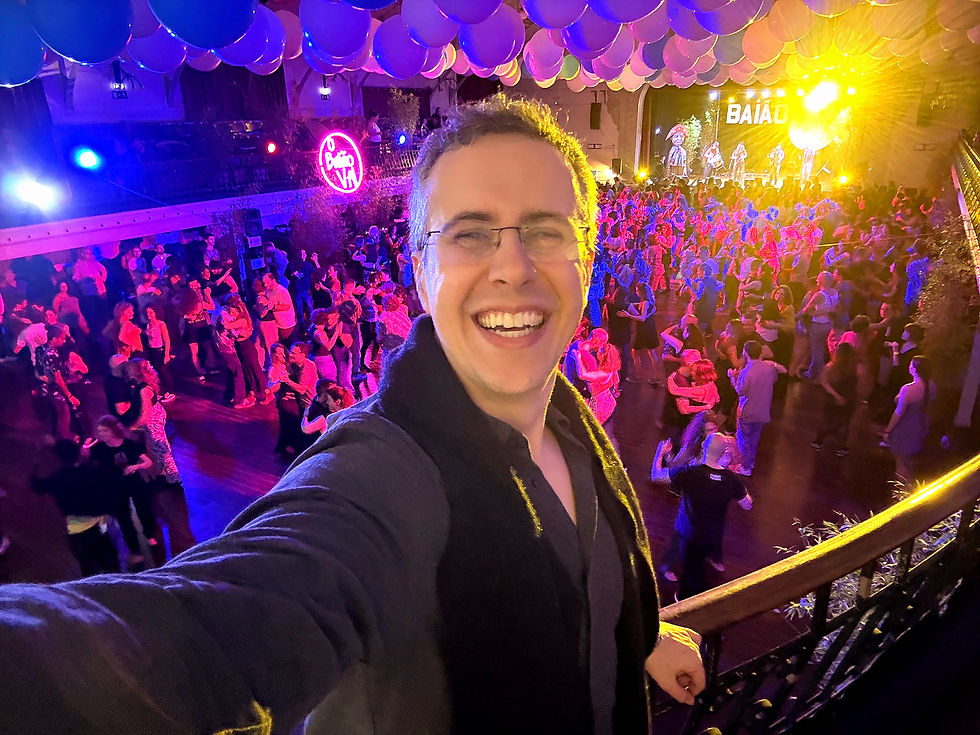
I’ve seen this many times, both in my own experience and in the stories my students later bring back to me. They travel for work, for vacation, or for personal reasons, and at some point decide to check out a local forró event without knowing anyone.
Later, they return with stories that tend to follow a similar thread.
“I didn’t know a single person there,” one of them told me, “and within a few songs I was already dancing, talking, feeling completely at ease.”
Another said something that stayed with me: “It felt like I had walked into a group of friends I just hadn’t met yet.”
That shift, from being a stranger to feeling included, often happens much faster than people expect, and it’s part of what makes these experiences so memorable.
Over time, this creates a network of communities across different cities that, even without being formally connected, share a similar openness and way of interacting.
This same dynamic becomes even more visible in larger gatherings, where dancers from different places come together in a shared environment and interact more intensively over a few days:
If you’re curious about how this extends across North America, there are growing communities in many cities.
And in other regions, similar patterns have shaped long-standing scenes.
The role of the forró community in a city like New York
New York is a place where people are constantly arriving and rebuilding their social circles. It offers a lot, but feeling connected can take time.
In that context, having access to a consistent and welcoming environment can make a real difference. For many, this becomes a way to meet people in a more natural and ongoing way.
You start recognizing faces, conversations continue over time, and what felt unfamiliar gradually becomes part of your routine.
If you’d like to experience this in practice, events and festivals are often a direct way in.

Why the forró community offers a different entry point into dance
Within the forró community, the barriers tend to feel lower than expected. You can begin without prior experience, participate while still learning, and connect with others early on.
Over time, what starts as a single class or event often becomes something more consistent, shaped by the relationships built along the way and understood more clearly through experience. → Explore the Forró New York community
Related reading
If you’re interested in a more detailed look at how connections form on the dance floor, I explore this in another blog:
ABOUT THE AUTHOR
Rafael Piccolotto de Lima is the Founder and Educational Director of Forró New York, as well as a Latin Grammy-nominated composer, arranger, and music director.


Comments