

Forró New York Association: How It Started and What It Means Today

Updated: May 14
Starting something in a city like New York rarely comes from a single decision.
It usually comes from observing what is already there, noticing what is missing, and deciding to take responsibility for a small part of that gap.
This was very much the case with Forró New York, and later, with the creation of the Association.
The Early Steps Of The Scene
In the spring of 2017, a few months after I moved to New York, I started to pay closer attention to the local forró scene.
There were already good musicians active in the city, and there was clearly interest around the music and the dance. At the same time, some elements that help a scene grow in a more consistent way were still missing.
I decided to start contributing in a practical way.
The first steps were creating this website and the related social media channels to help promote existing events, and starting to teach dance classes regularly. Both felt like necessary pieces at the time.
Over the following years, I saw meaningful changes.
The number of forrozeiros in the city grew. New nights of music and dance started to appear. The city began to be included more often in the international forró circuit, including festivals.
This was not the result of one single initiative.
Many people contributed in different ways, as instructors, musicians, DJs, and event producers. What became visible over time was a growing sense that the scene could sustain something more structured.
Why Create An Association
As the scene evolved, a question started to become more relevant.
How do you maintain continuity?
Events can happen sporadically. Classes can start and stop. Projects can depend heavily on individual availability and circumstances.
Creating something more stable requires a different layer.
The idea of the Forró New York Association came from that need.
The Association was officially created in 2019, at a moment when the scene had already gained some momentum, but was still looking for ways to become more consistent and sustainable over time.
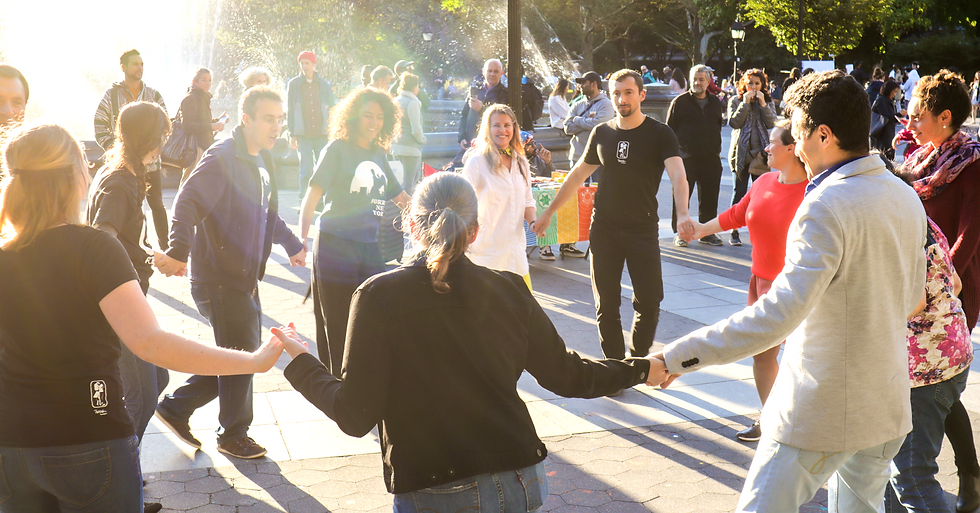
It was also inspired by similar models that have been successful in other cities, especially in Europe, where associations often play an important role in sustaining regular activities and supporting artists and instructors.
The goal was not to replace what already existed, but to create a structure that could support it.
What The Forró New York Association Is Today
Today, the Forró New York Association functions as a yearly membership connected to the activities produced through the platform.
Its role is relatively simple, but important.
It helps sustain classes, workshops, concerts, parties, festivals, and online content.
At the same time, it creates a more stable relationship with people who are already engaged in the scene.
For dancers who take classes regularly or participate in events throughout the year, the membership also makes participation more accessible through consistent discounts and additional benefits.
Why This Kind Of Structure Matters
One of the most common patterns in dance communities is inconsistency.
People start classes with interest, sometimes even enthusiasm, but over time it becomes harder to maintain regular participation. Schedules change, motivation fluctuates, and without some form of structure, it is easy to lose momentum.
This is not specific to forró. It happens across different dance styles.
What tends to make a difference is not only the quality of classes or events, but the presence of a framework that supports continuity.
Membership models, when they make sense for the participant, can play that role.
They reduce friction in decision-making, encourage regular participation, and create a clearer path for those who want to stay involved over a longer period of time.
Who The Association Is For
The Association was created with active participants in mind.
People who take classes on a regular basis, attend workshops and social events, and are interested in being part of the ongoing development of the forró scene in New York.
It is not necessarily something that every new dancer needs right away.
But for those who decide to stay engaged, it often becomes a natural step.
A Collective Effort
From the beginning, one idea has remained consistent. A dance scene is never built by one person alone. It grows through the accumulation of many individual contributions, sometimes small, sometimes more visible, but all part of the same movement.
The Association is one way of organizing part of that effort.
Members are also invited to participate more actively when possible, including volunteering in events or contributing to different aspects of the project.
These contributions help expand what can be done collectively.
Looking Back And Moving Forward
Looking back at the early years, the changes are clear. What started as a set of isolated initiatives gradually became a more connected ecosystem, with classes, events, collaborations, and a growing community.
The Association is one layer within that system.
Not the center of everything, but part of the structure that helps sustain it.
And like the scene itself, it continues to evolve over time.
ABOUT THE AUTHOR
Rafael Piccolotto de Lima is the Founder and Educational Director of Forró New York, as well as a Latin Grammy-nominated composer, arranger, and music director.


Comments