

How Forró Scenes Outside Brazil Grow and Sustain Themselves

When we think about the growth of forró outside Brazil, it is easy to get impressed by large festivals, international events, famous teachers traveling abroad, or the number of dancers in a city.
But in reality, all of these things usually depend on something much smaller and less visible that happens locally first.
They depend on the continuity of a scene and on the existence of a local ecosystem that actually works.

Over the years organizing classes, socials, and festivals in New York City, I gradually realized that stable forró scenes outside Brazil usually depend on something much simpler:
spaces where people can actually dance and socialize regularly
opportunities for new people to learn and enter the dance
communication structures that allow the community to stay connected
Without these three elements reinforcing each other consistently over time, scenes tend to remain fragile.
This topic became the center of a long conversation I had with a forró teacher and organizer living in the Netherlands, where we discussed the challenges of building a forró scene outside Brazil, creating welcoming social environments, and sustaining community culture over time.
A scene needs places where people actually want to gather
At the center of every stable forró scene, there are spaces where people genuinely enjoy spending time together.

Social dances are not only places to practice movements. They are places where friendships form, where people reconnect every week, where dancers meet new people, and where the community itself becomes emotionally meaningful.
When I first moved to New York, I remember going to events with excellent live music and thinking: “How is it possible to have such a good forró band playing and still have so few people dancing?”
The issue was not the quality of the music or the event itself.
The issue was that there still were not enough dancers integrated into the culture of social dancing.
Without people consistently dancing, inviting each other, socializing, and building relationships around the music, the scene struggles to sustain itself long-term.
A scene also needs ways for new people to enter
This became even clearer when I realized how important beginner classes are outside Brazil.
In Brazil, many people enter forró informally. Someone teaches them the basic step at a party, they start participating socially, and little by little they become integrated into the dance.
Outside Brazil, the process often works differently.
For someone with no connection to Brazilian culture or partner dancing, entering a forró social for the first time can feel intimidating. If everyone already knows how to dance and there is no clear entry point, many people simply will not stay long enough to become part of the scene.
That is why beginner-friendly classes become so important internationally.
They create a safe and structured environment where people can start participating before they feel socially comfortable entering parties and festivals.
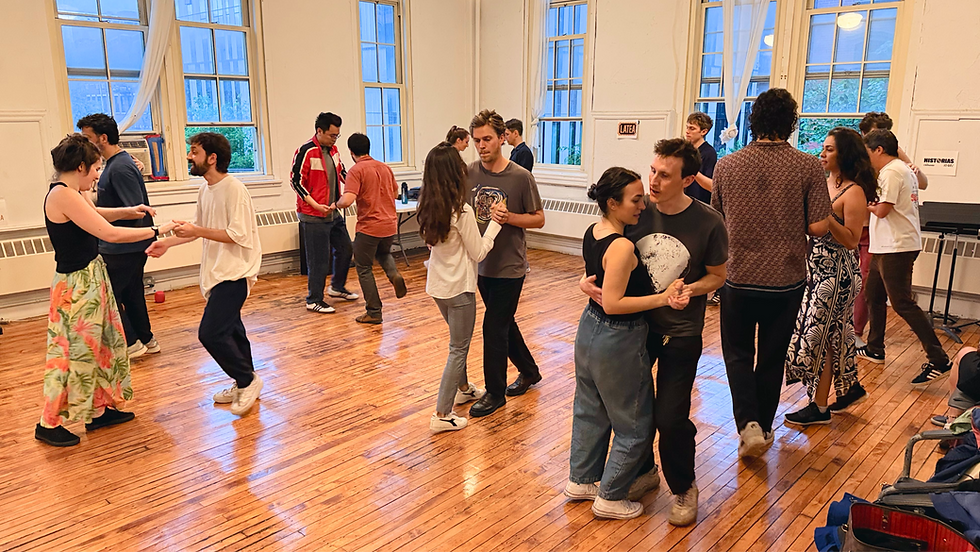
Much of the early growth of Forró New York came from exactly this realization. I started teaching beginner classes because I understood that without new dancers continuously entering the ecosystem, the social side of the scene would eventually stagnate.
This accessibility and beginner integration is something I explored more deeply here:
A scene survives through communication and continuity
The third element is communication.
People need ways to know what is happening, where events are happening, who is organizing them, and how to stay connected to the community itself.
When I first arrived in New York, this part of the ecosystem was still very fragmented. Events existed, but information was scattered. People often did not know where parties were happening or how to stay connected to the broader scene.
Part of the reason I created the Forró New York website back in 2017 was precisely to help centralize communication and make the scene more visible and accessible. Later, WhatsApp groups and social media also became important tools for helping dancers stay connected between classes, socials, and events.

Over time, I realized that stable scenes are rarely built only through dance itself.
They are built through repeated interaction, communication, and visibility over time.
If you want to learn more about the New York forró community, upcoming events, and how to join our WhatsApp communication groups, you can visit the community hub here on the website:
Why forró continues growing internationally
One of the reasons forró adapts so well internationally is precisely because these communities tend to grow organically around human interaction.
Small classes gradually turn into social groups. People begin attending parties together, traveling to festivals, and building friendships that extend across cities and countries. Over time, what started as a few people dancing slowly becomes a real community.
And perhaps this is one of the most interesting aspects of forró outside Brazil.
Its international growth was not built primarily through institutions or centralized expansion.
It grew because people kept creating spaces where music, dancing, friendship, and community could continue happening together over time.

In the end, stable forró scenes outside Brazil are rarely built all at once. They grow gradually, through repeated encounters, shared experiences, and communities that slowly learn how to sustain themselves over time.
For readers interested in understanding more deeply why forró creates such strong emotional and social connections outside Brazil, especially in Europe:
And for dancers interested in becoming part of these international ecosystems through classes, festivals, online learning, and social dancing:
ABOUT THE AUTHOR
Rafael Piccolotto de Lima is the Founder and Educational Director of Forró New York, as well as a Latin Grammy-nominated composer, arranger, and music director.


Comments