

Volunteers, Guest Teachers, Artists, and Community Collaboration at Forró New York

Updated: May 14
Forró New York exists in a somewhat unusual space between an educational project, an artistic initiative, and a community ecosystem.
It is not a large institutional structure, but it is also not simply one teacher running isolated classes.
There is a central educational and artistic direction behind the project, but much of what exists today came from people gradually becoming involved beyond the classroom itself: helping during events, supporting classes, volunteering during festivals, collaborating artistically, or simply becoming active parts of the community around the dance.
A large part of the project eventually grew from this coexistence between artistic direction and community participation.

How Collaboration Became Part of the Project
Forró New York began in a relatively simple way, with the idea of helping the local forró scene grow and creating more accessible entry points for new people discovering the dance.
At first, this happened through small classes, information about the scene, WhatsApp groups connecting dancers, beginner-friendly activities, and spaces where people with no previous experience could start learning the foundations of forró and meeting others interested in the culture surrounding it.
As the years passed, the artistic and educational vision behind the project also became more developed and structured.
Classes, workshops, festivals, online projects, visual identity, long-term collaborations, and educational materials started forming a larger ecosystem around the activities.
At the same time, more and more people became involved in different ways.
Some arrived through classes and festivals. Others through music, photography, scholarships, volunteering, guest teaching, or simply by remaining consistently engaged with the community over long periods of time.
Some people participated occasionally. Others slowly became recurring presences around the activities.
Especially during events like Forró New York Weekend, this collaborative dimension became increasingly visible through volunteer participation, guest artists, assistants, and community members helping support different parts of the experience.

Reception, transitions between activities, helping participants, setup, and backstage logistics are often supported by community members who genuinely want to participate more actively in the scene and contribute to the experience being created around the festival. As part of that involvement, volunteers may also receive discounted or complimentary passes for selected activities.
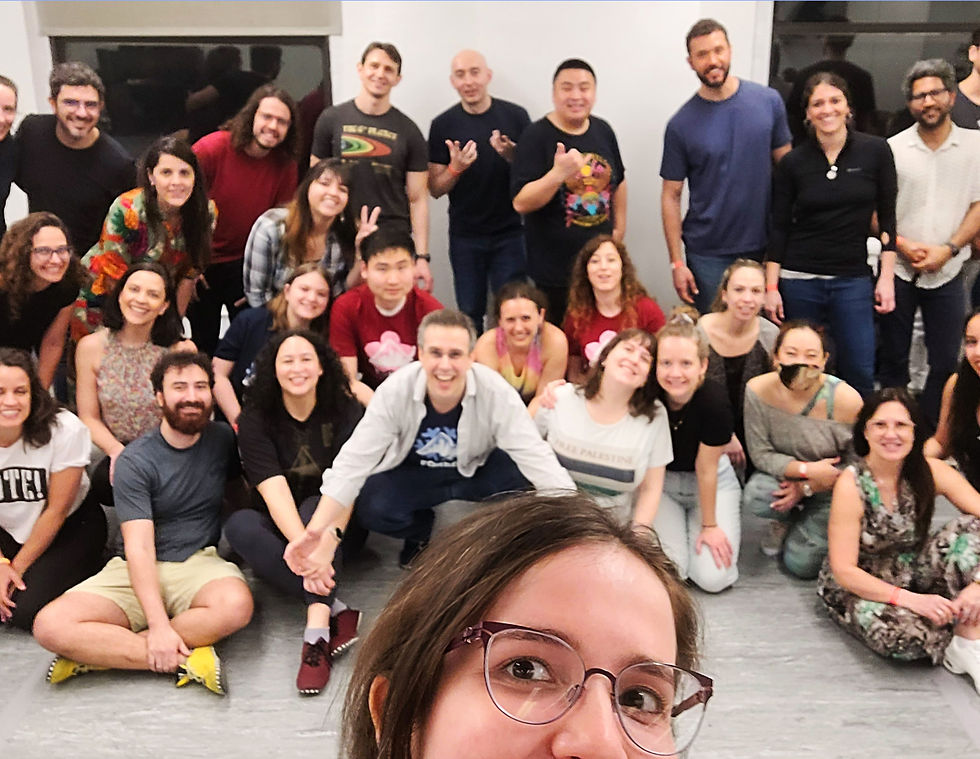
Something similar also started happening during the weekly classes, where long-term participation gradually transformed some students into recurring assistants, volunteers, and important community figures inside the project itself.
More experienced dancers became part of the beginner environment as assistants, helping newer students practice, feel welcomed, and integrate more comfortably into the social side of the dance, while also refining their own fundamentals through the teaching process.
An Example Through the Weekly Classes
One example involves a student who arrived shortly after the pandemic with previous experience in partner dances, especially tango, but with very limited formal experience in forró itself.
She quickly became one of the most dedicated people around the classes and activities: focused, receptive, curious, and consistently bringing a positive energy into the classes.
As her development accelerated, she transitioned into the intermediate and advanced groups while still remaining interested in beginner classes and foundational work.
Eventually, I invited her to officially assist during beginner classes because her presence was already helping newer students feel more comfortable and supported.
Today, she remains an important and active presence in the local scene and represents many of the qualities that became very important to the atmosphere we try to cultivate around Forró New York: openness, generosity, curiosity, and a collaborative relationship with dance.
A More Recent Example
A more recent example came through Brazilian dance teacher Juliana Santos, who moved to New York after previously running her own dance school in Brazil.
Forró was not originally the center of her professional work, but she arrived carrying a strong connection to Brazilian social dancing and quickly became involved with the local forró community.
From our first interactions, it became clear that she carried not only strong dance experience, but also a generous energy that fit naturally into the atmosphere surrounding the classes and activities.
She was invited to participate in the classes and gradually became one of the central support figures helping sustain the weekly activities and festivals.

Guest Teachers and International Exchange
Another important part of the project has been the presence of guest teachers, musicians, and artists visiting from different parts of Brazil and the international forró scene.
Many of these collaborations emerged in very organic and sometimes unexpected ways. Recommendations from other people in the scene, brief encounters at festivals and dance events around the world, conversations that started casually after classes or parties, and sometimes even mutual admiration through social media eventually led to contact, invitations, and the desire to work together artistically and educationally.
Some of those exchanges later became workshops, performances, tours, educational recordings, festivals, and long-term artistic relationships.
Over time, this exchange between local community building and international collaboration became one of the strongest characteristics of Forró New York.
One Example Through Dance Partnerships and Educational Collaboration
One important example of this long-term exchange is my collaboration with Camila Alves.

I first invited Camila to New York during the period when I was helping coordinate the educational program and workshops for NY Forró Fest (2018), one of the earliest forró festivals in the city before the creation of Forró New York Weekend.
At the time, Camila was already becoming one of the most recognizable and sought-after teachers in the international forró scene, especially through her work exploring musicality, creativity, and the relationship between leads and follows in social dancing.
Those themes resonated strongly with many of the ideas I was also developing pedagogically at the time, which created a natural artistic affinity between us.
What started as a single festival invitation eventually led to many other collaborations.
In 2019, we continued developing that collaboration through workshops, classes, and an educational tour across the United States and Canada.
During the pandemic, she also prepared and recorded a special class for my students in the online learning programs connected to Forró New York.
After in-person events resumed, Camila became one of the first guest teachers invited back for Forró New York Weekend and has continued returning to New York through both Forró New York activities and independent projects organized by other members of the local scene.
For people who follow the Forró New York YouTube channel, she also became one of the recurring faces appearing in dance demonstrations, workshop videos, and social dancing footage recorded throughout the years.
Another Example Through Music and Long-Term Artistic Relationships
Another important example came through my collaboration with Brazilian percussionist, drummer, singer, and educator Cléber Almeida.
Long before participating in activities connected to Forró New York, Cléber was already someone important in my own artistic formation.
Years ago, while I was still in university in Brazil, I attended workshops where he was teaching. At the time, he was already widely respected as a percussionist, conservatory professor, and one of the important musicians connected to contemporary Brazilian music and forró.
Over the years, our artistic paths crossed again through different projects in Brazil, including performances connected to the Forró Sem Palavras Sinfônico project with the Orquestra Sinfônica Municipal de Campinas (OSMC), where Cléber participated as a guest soloist/percussionist.
Later, it became a great joy to bring him to New York as one of the musical headliners of Forró New York Weekend, performing throughout the entire weekend.

He played two nights alongside a trio of local musicians, appeared as a featured artist and percussionist in the Forró Sem Palavras concert presented at National Sawdust (video below), and also taught a workshop designed for dancers interested in deepening their relationship with rhythm and Brazilian musical traditions.
Having artists like him pass through New York creates something that goes beyond a single performance or workshop. It helps strengthen the connection between the local community and broader artistic movements happening across Brazilian music and contemporary forró culture.
A Scene Built Through Participation
Scenes outside Brazil often grow because people decide to participate.
Someone helps during a festival. Somebody starts assisting classes. Visiting artists stay with local dancers for a few days. People meet through the scene, create friendships, bands, collaborations, and eventually their own projects.
Most of this was never formally planned. It emerged little by little through people continuing to stay involved around the dance.

If you would like to learn more about the broader history of the project and the development of the forró scene connected to New York City, these pages explore that process further:
ABOUT THE AUTHOR
Rafael Piccolotto de Lima is the Founder and Educational Director of Forró New York, as well as a Latin Grammy-nominated composer, arranger, and music director.


Comments