

What Makes Someone Feel Like a Forró Dancer?

Updated: 3 days ago
Before the First Turn: How Forró Dancers Understand Movement Differently
As a teacher in New York, I frequently dance with people who are discovering forró for the first time.
Many arrive through friends. Others find us through social media, live music events, or dance communities connected to salsa, tango, swing, zouk, ballroom, and other partner dances. Because I am often visible as an organizer and instructor, it is common for people to introduce themselves at events and ask me to dance.
These dances are always interesting to me.
Not necessarily because they are the dances I enjoy most. In fact, many of the qualities I love most about forró are often precisely the things that are still missing in those first encounters.
What fascinates me is something else.
Over the years, I started noticing that I could often recognize a dancer’s background within the first few moments of a dance. Sometimes before a single turn happened. Sometimes before any recognizable movement appeared at all.
A salsa dancer often feels different from a tango dancer. A tango dancer often feels different from a zouk dancer. Even when everyone is dancing well, there are traces of how each person understands connection, movement, timing, and communication.
After enough years dancing, I found myself making quiet guesses.
“You probably dance salsa.”
“You seem like someone who has danced tango.”
“You’ve done social dancing before, haven’t you?”
Most of the time, I was right.
Eventually, these observations led me to a broader question: what exactly makes someone feel like a forró dancer?
In my experience, experienced forró dancers often recognize each other long before any complex movement happens. The clues usually appear in three places: where the connection happens, how dancers relate to uncertainty, and what movement habits they bring into the dance.
The answer, I think, has surprisingly little to do with movement vocabulary.
There are dancers with a limited repertoire who immediately feel at home inside the language of forró. There are also highly skilled dancers from other traditions who can execute complex movements yet still feel like visitors passing through a foreign language.
The more I reflected on these experiences, the more I realized that three characteristics appeared again and again. They are not exclusive to forró, nor are they present in exactly the same way in every style or community. But they are deeply associated with the version of forró that I learned, danced, and taught over the last twenty years.
Of course, this is not a rigid definition. One of the things I enjoy about forró is precisely the fact that different communities, teachers, and dancers often develop very different ways of inhabiting the dance. Even among people I deeply admire as dancers, there are significant differences in style, posture, movement quality, musical interpretation, and personal expression. What follows is not an attempt to define a single correct way of dancing. These are simply three tendencies that I have encountered often enough, over enough years, that they became part of how I recognize a dancer who feels deeply at home inside the language of forró.
In this article, I want to explore those three ideas through stories, observations, classes, festivals, and conversations gathered throughout those years.
If you already dance forró, many of these sensations will probably feel familiar.
If you are new to the dance, perhaps these observations will help explain why forró can feel so different from other partner dances, even before the first turn, spin, or recognizable movement takes place.
1. Connection Through the Body: The Dance Begins in the Body
One of the first things I notice when dancing with people from different backgrounds is where they expect the connection to happen.
In many partner dances, a significant amount of information travels through the arms. The frame becomes a stable structure through which movement is communicated. The body remains active, of course, but the sensation is often that the conversation is happening primarily through the architecture created by the upper body and the arms.
Forró often feels different.
Particularly in the communities and styles where I spent most of my dancing life, the conversation tends to emerge from the center of the body. Weight shifts, balance changes, directional intentions, and subtle changes in pressure often travel through the torso before they travel through the arms.
This is one of the reasons why dancers from other traditions can sometimes feel immediately recognizable.
A skilled salsa dancer may bring extraordinary clarity through the frame. A tango dancer may bring remarkable sensitivity to timing and balance. A zouk dancer may bring fluidity and body awareness that many forró dancers would admire.
The difference is rarely about quality.
It is often about where the conversation begins.
When I dance with someone who has spent years inside forró, there is often a feeling that the body itself becomes the primary place where information is exchanged. The embrace does not simply connect two people. It becomes part of the language through which the dance is built.
One of the things I enjoy most about dancing with people from other backgrounds is observing these differences in real time.
Many times, after a dance, I find myself asking questions.
“What dances have you done before?”
“How long have you been dancing?”
“Did you come from salsa? Tango? Zouk?”
Often the answer confirms what I was already sensing.
Not because I recognized a specific movement, but because certain assumptions about connection were already present in the body long before any recognizable figure appeared.
2. Flexibility and Response: The Dance Leaves Room for Possibility
The second characteristic is more difficult to describe because it has less to do with technique and more to do with how the dance is approached.
Many people arrive at forró expecting that social dancing consists primarily of executing movements correctly. They learn a basic step, a turn, a sequence, and naturally begin trying to reproduce those elements consistently.
This is understandable. Most of us learn new skills that way.
Yet one of the things that attracted me to forró from the beginning was the degree of flexibility that exists inside the dance.
A dance can become energetic or quiet. It can expand or contract. It can stay almost completely still for a moment before moving again. It can travel across the floor or remain in a small space. It can become playful, rhythmic, conversational, or deeply simple.
None of these possibilities necessarily require new moves.
What they require is responsiveness.
Over the years, I have often noticed that experienced forró dancers seem comfortable allowing the dance to change shape moment by moment. They are not constantly searching for the next figure. Their attention remains connected to the music, the partner, and the particular interaction unfolding at that moment.
That quality can be difficult to identify visually, but it becomes obvious when you feel it.
The dance starts to resemble a conversation rather than a sequence.
In many ways, this flexibility is what allows two people with very different backgrounds, experiences, and personalities to create something together.
The dance remains alive because neither person knows exactly where it is going next.
3. Movement Habits: The Body Carries Habits From Other Worlds
The third characteristic is perhaps the one I find most fascinating.
Every dancer carries traces of the environments where they learned to move.
These traces are not mistakes. They are histories.
A salsa dancer often carries certain habits. A tango dancer carries others. A zouk dancer carries others still.
Sometimes these habits appear as movement preferences. Sometimes they appear as posture. Sometimes they appear as recurring ways of using the hips, shoulders, arms, or torso.
Recently, while teaching alongside a guest instructor, we explored this idea during a workshop.
We asked the entire class to participate in an exercise. One partner was instructed to maintain a strong and continuous physical agenda throughout the dance. Large movements. Constant movement. Repeated movement. The objective was not to respond to the interaction, but simply to continue doing something regardless of what the other person proposed.
Then the partners switched roles.
The reaction was immediate.
People consistently described a similar feeling. Participating in the dance became more difficult. Influencing its direction became more difficult. Many described the sensation that the conversation had become one-sided, as though one person was continuously speaking while the other was left with very little room to contribute.
That exercise reminded me of something I have observed repeatedly throughout the years. One of the qualities I associate most strongly with forró is the absence of a permanent physical agenda. Experienced dancers often seem comfortable allowing the dance to be shaped by the music, by their partner, and by whatever emerges from the interaction itself.
For that reason, some of the most memorable dances are surprisingly simple. They do not depend on a constant flow of movement or an endless succession of figures. They remain engaging because both dancers continue responding to one another throughout the entire conversation.
Many of the habits that immediately reveal someone’s background are connected to this idea.
Sometimes it is a particular use of the hips. Sometimes it is a characteristic arm movement. Sometimes it is a way of organizing posture or generating momentum.
None of these things are inherently good or bad.
They simply reveal where the body has spent time.
A Dance in São Paulo
A few months ago, I spent several days in São Paulo working on an artistic project.
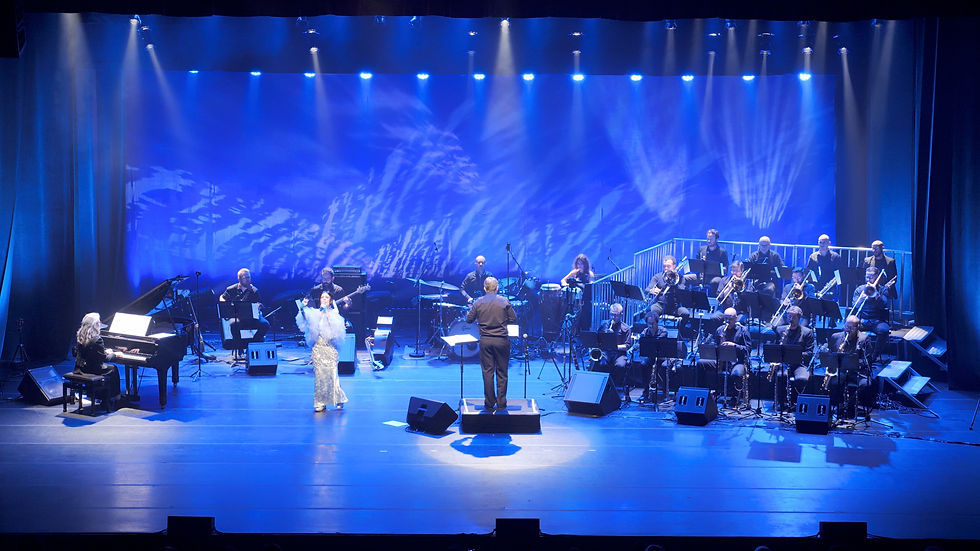
After the rehearsals and performances, I visited a few social dances. The music was good, the atmosphere was pleasant, but for various reasons many of the dances felt somewhat unsatisfying.
By the end of one particular evening, I was already preparing to leave when a woman approached me and invited me to dance.
I had not seen her dance all night.
The moment we embraced, something felt different.
The sensation appeared long before any technically demanding movement. We stood there briefly before starting. There was no rush. When I initiated movement, she responded naturally. When the direction changed, she adjusted effortlessly. Nothing felt anticipated. Nothing felt disconnected from what was happening between us.
Within seconds, I was almost certain that I was dancing with someone who deeply understood the language of forró.
Later I learned that she was a forró teacher based in Argentina and that she had originally trained professionally in tango.
What stayed with me was how naturally the qualities discussed throughout this article appeared from the very beginning of the dance. The connection emerged through the body, the interaction remained open and responsive, and there was no sense that either of us was trying to impose a particular idea onto the conversation.
Looking back, I suspect these characteristics are part of what drew me so strongly to forró in the first place.
Of course, not every great forró dancer expresses these qualities in exactly the same way. Some dancers prefer a closer embrace, others a more open one. Some are highly rhythmic and energetic, while others are remarkably subtle. Some bring influences from tango, samba, zouk, ballet, contemporary dance, or countless other movement traditions.
What interests me is not the surface appearance of the dance, but the underlying relationship to movement. Across very different styles and personalities, I often find the same willingness to listen, adapt, negotiate, and construct the dance together rather than simply execute it. The external form may vary considerably. The underlying logic often feels surprisingly familiar.
Over the years, I have danced many styles, admired many traditions, and learned from dancers with very different backgrounds. Yet I continue returning to the particular freedom I find in forró. A dance can begin with very little and gradually discover its own shape through attention, interaction, and shared responsiveness.
Some of the most memorable dances of my life emerged from that process. They were not necessarily the most complex dances, nor the most visually impressive. What made them memorable was the feeling that both people remained engaged in the same conversation from beginning to end.
Take Your Next Step with Forró New York
Whether you're looking to start dancing, connect with the local community, or deepen your understanding of forró, there are many ways to explore and learn with us.


ABOUT THE AUTHOR
Rafael Piccolotto de Lima is the Founder and Educational Director of Forró New York, as well as a Latin Grammy-nominated composer, arranger, and music director.


Comments