

Fragrance for Social Dancing: How to Choose the Right Scent for the Dance Floor

Updated: May 5
When we think about forró and connection on the dance floor, we usually focus on the music, the embrace, and movement. Yet there is another layer, subtle but powerful, that shapes the entire experience: smell.
This is a personal reflection, not a manual or a set of strict rules. It comes from years on dance floors, talking with students and fellow dancers, observing reactions, and from my long-standing passion for perfumes and fragrances.
In recent Forró New York videos that I filmed and edited for our YouTube channel, I interviewed dancers in Brazil about attraction, chemistry, and rejection in dance. When I asked what draws them to someone or makes them avoid a dance, the topic of smell came up naturally. Many people shared experiences of feeling drawn to someone or, very often, repelled - not because of perfume, but because of poor hygiene.

Why smell matters in social dancing
Smell is far from a minor detail. It is one of the most direct and emotional senses, often bypassing rational thought. In dance, where physical proximity and contact are constant, scent becomes part of the conversation.
It can draw people in, push them away, and leave a lasting impression.
Hygiene comes first
Perfume is not a solution for bad odor.
That is basic, but it bears repeating. In the comments and interviews, people described situations such as accumulated sweat, unwashed or oily hair, bad breath, cigarette smell lingering on the body and hair, and clothes worn multiple times without washing.
Perfume cannot fix poor hygiene. Fragrance should come after proper hygiene, as a complement.
For a deeper look at basic preparation for the dance floor, I covered this in another post. Here, the focus is different.
Fragrance as part of your personal presentation
Have you ever considered that the scents you carry - your natural freshness, your personal hygiene, the subtle fragrance you wear - can have more impact than the shirt, dress, or shoes you choose?
Scent shapes your presence on the dance floor, adding a layer of allure and influencing the experience you create for your partner.

I’m passionate about perfumes and fragrances. I have a collection much larger than I could ever use in years - not out of necessity, but because exploring scents brings me pleasure, curiosity, and a subtle sense of being present in my own body.
Sometimes I even wear fragrances at home for the enjoyment of a gentle personal scent bubble. The same care can be applied to the dance floor.
A Note on Fragrance Sensitivity
It is also worth mentioning that some people are highly sensitive or allergic to fragrances.
For some, being in close contact in an enclosed space with scented products can cause discomfort or even mild physical reactions.
This does not mean everyone should avoid wearing fragrance when social dancing. It simply means there is a balance to consider, and each dancer makes their own choice.
One option is to stay fragrance-free and rely solely on cleanliness, playing it completely safe and minimizing the chance of bothering anyone.
Another option is to enjoy fragrance as a form of personal expression, knowing that there may be people at a party who prefer not to dance with scented products, while others may find that your scent adds to the experience.
A thoughtful fragrance can highlight aspects of your personality or the emotions you wish to convey, enhancing your presence on the dance floor.
How to choose a fragrance for dancing
Scent is highly subjective. Some fragrances are polarizing: some people love them, others dislike them, regardless of quality or price.
On the dance floor, in enclosed spaces with close physical contact, the question is not just whether you enjoy a fragrance, but whether it creates a pleasant experience for your partner.
The goal is not to impress aggressively or to disappear completely into the background. A scent should be inviting, pleasant, and yes, potentially alluring and sensual, without causing discomfort.
I like to be a little daring with my fragrance choices at times, especially now that I have become somewhat of a fragrance collector. I often steer clear of the most overused scents that many men wear, favoring instead classic or vintage-style masculine fragrances that have largely been forgotten, such as Fahrenheit Parfum and Eau Sauvage by Dior or Drakkar Noir.
I also explore lesser-known lines, like Guerlain Homme and L’Homme Idéal Cologne, H24 by Hermès, and even niche perfumes such as Cedrat Boise by Mancera, Layton by Parfums de Marly, Santal 33 by Le Labo, Colonia Intensa by Acqua di Parma, and Original Vetiver by Creed.
If you are new to fragrances
A good place to start is in a fragrance store, sampling scents on paper strips. This step is not about finding the perfect one immediately, but about narrowing things down.
Smell a variety of options and notice which ones you genuinely enjoy. When a few stand out, it is time to see how they behave on your skin.
Fragrance changes once it is on your body. Apply a couple of the scents you liked most to different spots on your forearm, then step outside and give your nose a break.
Over the next few hours, check back in. Notice how the scent evolves, how long it lasts, and how strong it feels. This tells you far more than any quick test at the counter.
If possible, buy a decant, a small test bottle, and wear the fragrance a few times before committing to a full bottle.
Strong and long-lasting does not necessarily mean better. Focus on the character of the scent, not only its performance. You can always reapply if needed.
Other ways to create a pleasant scent
Perfume is not the only option.
Scented shampoos, body creams, body sprays, and hair products, especially for those with longer hair, can work very well. They are lighter and less invasive, reducing the chance of discomfort and often creating a pleasant scent presence for close-contact dancing.
Fragrance does not have to be expensive
For many people who are new to fragrances, cost is often the first obstacle.
Walking into a department store filled with luxury bottles and designer names can feel intimidating, and it is easy to assume that smelling good automatically means spending a lot of money.
I understand that feeling. I love fragrances, I have collected them for years, and I do own several designer and niche perfumes, including some of the ones I mention here, which are not cheap.
But this is important to say clearly:
You do not need to spend a lot of money to smell good.
As I mentioned earlier, options like shampoos, body sprays, and scented lotions already go a long way. They create a clean and pleasant scent with a lighter presence, often perfect for dancing, and they are usually much more affordable than perfume.
Even when it comes to fragrances, there are many accessible alternatives. In Brazil, for example, brands like O Boticário and Granado offer well-made, pleasant scents at a fraction of the price of international designer perfumes. They are simple, effective, and easy to wear.
If you are traveling, duty-free shops can also be a good option. Their clearance sections often include fragrances that are not the newest releases but are still excellent.
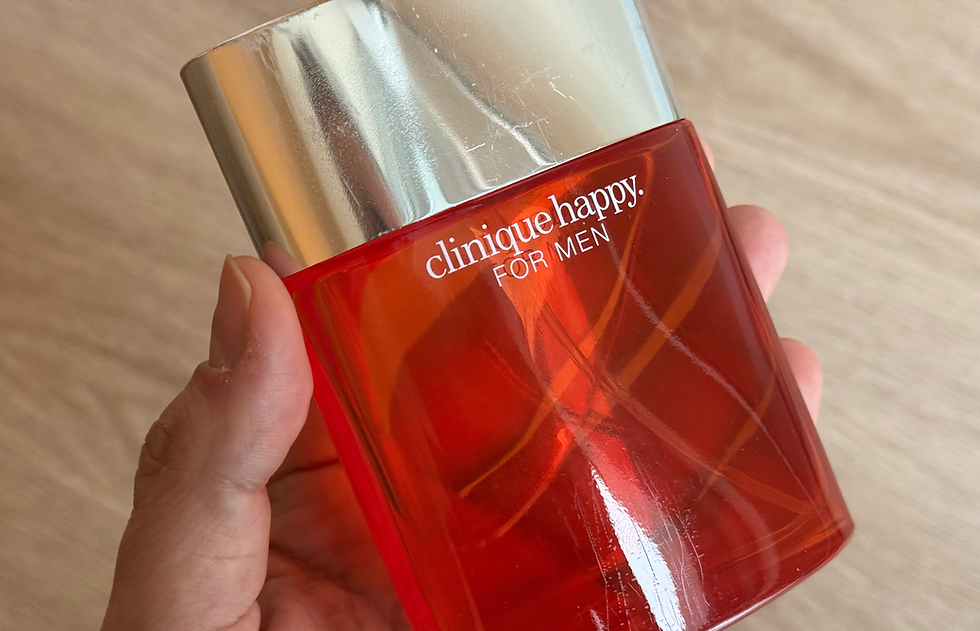
Over the years, I have bought several this way. One of them, Clinique Happy, even became my signature scent for a period of my life while I was living in Miami during graduate school. I used three bottles of this one over the years.
I also wore it during a three-week North American forró tour with Milena Morais back in 2019. We spent long hours traveling and dancing closely together, which meant she was the person most immersed in my fragrance.
In a kind gesture, I decided to let her pick which fragrance I should wear during the trip. I showed her my small collection at the time, and she chose Clinique Happy. From that moment on, the scent became inseparable from the memories of that tour.

During the trip, I received a few compliments at parties, including one that stuck with me: “Wow, you smell great. What are you wearing? Other men should wear real, high-quality fragrances like you.”
Little did anyone know, that fragrance had come from a duty-free clearance section and cost only about 30 percent of a typical designer perfume.
There are also reputable discount websites where original fragrances can be found for much lower prices, as well as a growing market of Middle Eastern brands that offer fragrances inspired by well-known designer and niche scents at a much lower cost.
The takeaway is simple. The cost barrier should never be a reason to stay away from fragrance. Smelling good is not about luxury or price. It is about care, intention, and choosing what works for you.
How much fragrance should you apply?
Dosing matters more than you might think.
Light fragrances, such as colognes and fresh, natural scents, usually have lower projection and shorter longevity. They allow for a few extra sprays without overwhelming anyone and often fade naturally by the end of the evening. You can reapply after a few hours if needed.
Denser fragrances require a different kind of attention.
Overly sweet, harsh, synthetic, animalic, or very strong and unusual scents carry more risk, especially up close. They can be captivating in the right amount, but quickly become too much if overapplied.
In most cases, just a couple of sprays are enough to make an impression without being overpowering.
Application areas matter just as much as the fragrance itself. The neck sits right in your partner’s breathing zone. It can be intimate and beautiful for light, fresh, natural scents, but it often becomes too intense for stronger perfumes.
With bolder fragrances, it is better to apply them where they can unfold more slowly: arms, forearms, under or on your clothes, or even behind the knees, especially for scents with heavier sillage.
From there, the fragrance rises gently with movement, creating a soft, enveloping aura that draws someone in rather than overwhelming their senses.
There is a famous saying from the physician Paracelsus: “the dose makes the poison.”
It captures the idea that a substance intended as medicine can heal in the right amount, but become harmful if overused. The same is true for fragrance: a little can enhance your presence and allure, but too much can overwhelm and repel.
Safer fragrance choices for the dance floor
Summer or warm-weather fragrances are usually safer choices for crowded, hot dance floors. They are lighter and less likely to be overpowering.
Woody, citrus, fruity, aquatic, or naturally floral scents tend to convey cleanliness and lightness.
Masculine, mass-appealing classics include Armani Acqua di Giò, Dolce & Gabbana Light Blue, Abercrombie & Fitch Fierce, and Calvin Klein One, all scents I have personally worn extensively in warm conditions over the years. I can also include Clinique Happy, which I already mentioned earlier.
Other slightly less-known fragrances that work similarly - offering freshness and a clean, inviting vibe - and that I tend to use more nowadays include Dior Homme Cologne, Montblanc Explorer, and Arabiyat Prestige Marwa, a Middle Eastern fragrance inspired by Louis Vuitton Imagination.
In contrast, very bold and controversial options such as Kouros by Yves Saint Laurent are not safe choices for social dancing. This fragrance, for example, is extremely strong, with animalic notes like civet, which many people may find challenging or unpleasant.
I personally would not wear it to a forró event, and I would not recommend it to anyone else in a close-contact dance setting.
Feminine examples of fragrances well-suited for the dance floor include Dolce & Gabbana Light Blue, a true classic and one of the best-selling women’s perfumes worldwide for decades, and Guerlain’s Aqua Allegoria line, which is light, fresh, and elegantly airy.
In contrast, Chanel No. 5, while a historical classic, is very strong, including some very distinct synthetic notes, such as its prominent aldehyde tones, which can be overwhelming for some. Personally, I find it heavy and cloying, especially in close proximity on the dance floor.
In Brazil, Granado colognes are worth noting. I recently discovered this line and found the scents simple, direct, and medium to low projection, very pleasant for most people. They are the kind of fragrances that work well in a forró environment.
Another brand with similar characteristics is L’Occitane, which I particularly love for their verbena fragrance, a unisex scent.
Be bold if you want, but do it wisely
While I often recommend lighter fragrances for crowded dance floors and close-contact situations, I have started including some bolder and stronger scents in my dance wardrobe over the years.
The key, as always, is moderation and careful application.
Two of my recent choices are Carlisle from Parfums de Marly, which I brought with me on my European tour last year, and Nishane Hacivat, which has received a number of positive comments on the dance floor.
Both fragrances are unique and very powerful, yet they work well when used thoughtfully.
Using these scents sparingly and in the right spots ensures they remain enjoyable rather than overwhelming. Beyond simply smelling good, these fragrances give me a distinctive presence and create a unique olfactory experience for those dancing with me.
If you are, like me, passionate about fragrances, do not be afraid to explore scents that stand out.
Finding a fragrance that is uniquely yours can add an extra layer of personality and memory to your dance experience, while still respecting the comfort of others around you.
Dancing with the senses: touch, scent, and shared presence
In dance, we focus on creativity, musicality, movement vocabulary, technique, and body language. All of this matters, but a huge part of the dance experience is sensory.
There is the tactile experience: contact, embrace, pressure, and the sensation of well-cared-for skin.
There is also the olfactory experience, which is subtle but powerful.
From personal experience, being near someone whose presence conveys care, attention, and hygiene changes the quality of the dance completely. When that care comes with an inviting and sensual scent, the experience deepens. You want to stay in that moment, sustain the contact, and intensify presence.
Many people choose partnered dances like forró for this reason: the experience of connection, shared presence, and bodies in constant dialogue.
Caring for how you smell is not vanity or a trivial detail. It is part of the same attention given to touch, embrace, and awareness of your partner.
When all these elements align, dance becomes more than movement. It becomes a full sensory experience.
ABOUT THE AUTHOR
Rafael Piccolotto de Lima is the Founder and Educational Director of Forró New York, as well as a Latin Grammy-nominated composer, arranger, and music director.


Comments