

Basics, Basics, Basics: How Practicing Forró Fundamentals Changed My Dancing

Updated: May 16
This is a personal reflection, not a technical guide to the basic steps. The focus here is why fundamentals such as rhythm, embrace, balance, and adaptability continue to matter long after the first class.
When people start learning forró, one of the most common questions is how to improve faster and feel more comfortable on the dance floor.

How Quickly Can You Feel a Dance
How long does it take for you to know if a dance will be good or not?
You may not believe it, but for me, it becomes clear after just a few seconds into a song with a new partner, even before we do any turn.
You may ask:
“What is your secret?”
“How can you tell so quickly the quality of a dance?”
The answer is simple: the basics.
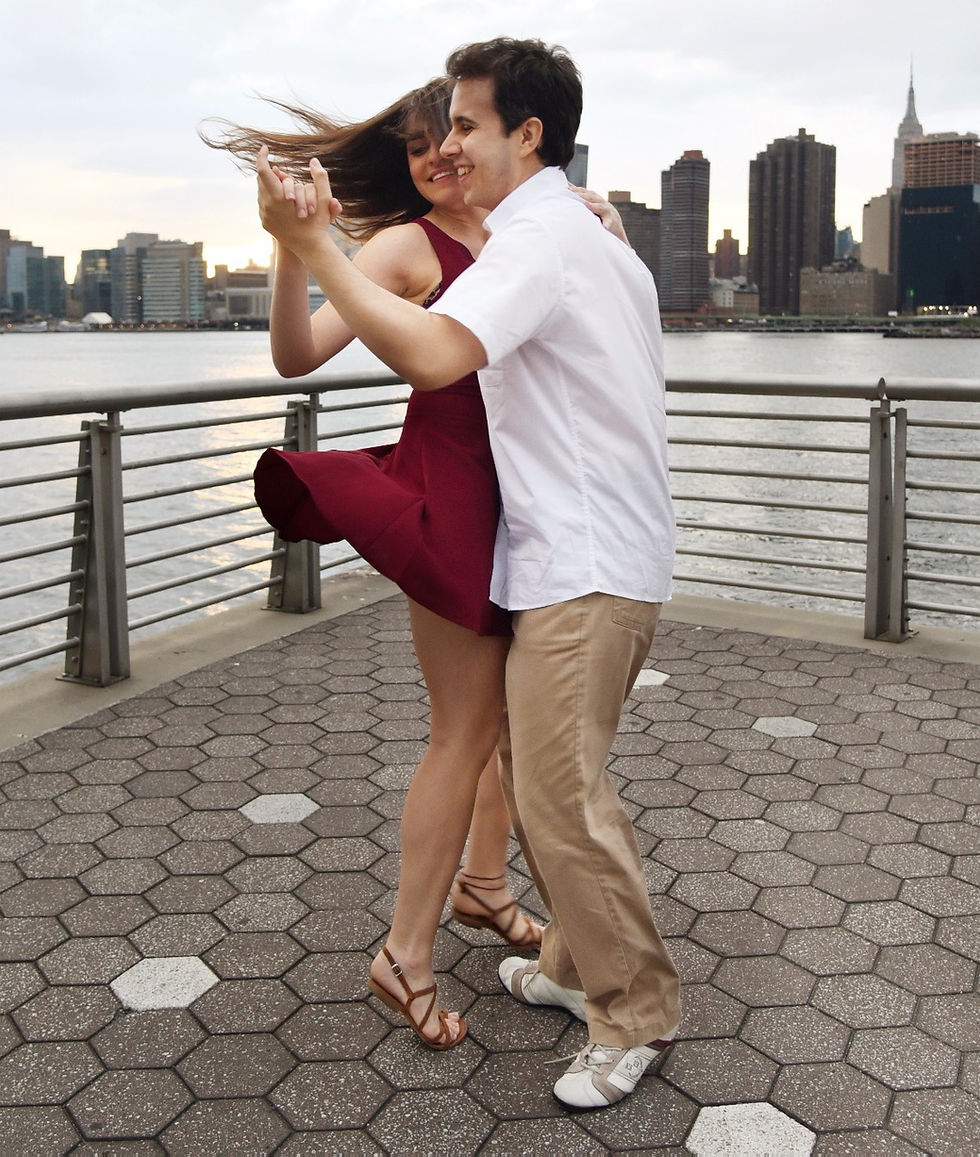
Rhythm, embrace, and the ability to adjust are the elements that reveal a dancer in the very first steps.
Why Basics Matter More Than Complex Moves
It is curious to notice how many beginners and even intermediate dancers believe they already know the basics and don’t need to practice or refine them further.
When I look back at my own beginnings in forró, more than a decade ago, I remember very clearly how eager I was to learn more and more complex moves. I wanted to be able to show my partners that I could also perform those “fancy” elements.
I had the illusion that more moves would translate into a better dance.
In reality, it doesn’t really matter how many moves you do or how complex they are if the fundamentals are not there. If the embrace feels uncomfortable or disconnected, if the rhythm is off, or if the dancer’s attention is focused only on themselves, the experience becomes limited.
This is something I often summarize in my classes:
It doesn’t matter which moves you do. It is how you do them that really matters.
If you’re at the beginning of your journey and trying to understand what to focus on first, this may help give you a clearer starting point:
Refining Basics in Practice and in Teaching
At that time, during the early months of my work with Forró New York, I was teaching a single group with mixed levels. As the group started to grow, I began separating beginners and intermediate students, eventually opened a dedicated intermediate class.

It was a lot of fun to finally explore more complex movements with students.
But if you ever come to one of my classes, be prepared to spend a good amount of time refining the basics.
These fundamental elements are what allow more advanced movements to feel natural and enjoyable, instead of forced.
What Good Forró Feels Like
Good forró, in my view, is forró that flows naturally. It feels like a long, friendly hug moving with the music. It is a dance that makes you want another song.
With that in mind, consider this: your first moments with a new partner, often before you show any repertoire of turns or variations, are already enough for them to decide whether they want to keep dancing with you.
A Personal Story About Practicing Forró Basics
As an epilogue, I want to share a memory from my early days in forró. It is something that could be a source of embarrassment, but today I am happy to share it.
During my first year dancing forró, I would go to classes and parties almost every night in my hometown of Campinas, in São Paulo.
But I would do more than just attend.
Almost every night, I would come home, put on my headphones, go to the kitchen, which had a large window that worked as a mirror, and spend hours practicing my fundamentals. I would dance with an imaginary partner.
It was my way of making sure that when I danced with a real partner, I could focus entirely on her, instead of using my energy trying to coordinate my own steps.
My neighbors may have thought I was a little crazy, dancing alone late at night in front of a sixth-floor window.
But that process made a difference.
A significant one.
Over time, I transformed from a shy forrozeiro who would dance only a few songs per night into someone who became one of the most requested dancers on the floor.
In the following year, I was invited to be part of the Forró Brasil dance team, based at Cooperativa Brasil, one of the most important forró venues in Brazil for over a decade.
What Practicing Forró Basics Alone Can Develop
Looking back, what made the difference was not learning more moves.
It was staying with the basics long enough for them to become part of me.
If you’ve ever wondered whether it’s possible to develop this kind of clarity on your own before dancing with others, this may give you a deeper perspective:
Final Thoughts on Practicing Forró Basics
So, who wants to come practice basics with me?
Below is a full warm-up session from a workshop we organized right after the pandemic, bringing together the forró and salsa communities in New York. This was an introduction to forró for dancers coming from a different background, and the work starts where it always does - with rhythm, coordination, and the basics.
What you see in the video above reflects very closely the kind of work I described earlier. Not focused on complex figures, but on building clarity through repetition, connection to the music, and awareness of the body.
Even in a group setting, the goal remains the same: creating a foundation that allows the dance to feel more natural over time.
This way of working has stayed very present in how I teach, but it has also taken different forms depending on the context.
Practicing the Basics in a Different Context
During the pandemic, I returned to this same kind of practice in a much more individual and focused way. I spent a lot of time working on my own, and eventually started sharing that process live with a group of students online.
From that came a series I called forró workouts - 30-minute guided practice sessions with medium and faster tempo music, designed to help you work on the fundamentals, variations, and coordination in a continuous and more dynamic way.
In many ways, it was a return to that same idea from the beginning: spending time with the basics until they become part of your body.
Those sessions are now part of the material available in my online courses at Forró New York, for anyone who wants a structured way to practice and revisit these elements:
And if you’re in New York, this is something we continue to develop in person as well, in weekly classes and events, where these fundamentals are constantly revisited and applied in real interaction:
ABOUT THE AUTHOR
Rafael Piccolotto de Lima is the Founder and Educational Director of Forró New York, as well as a Latin Grammy-nominated composer, arranger, and music director.


Comments